

Get in Touch
1000 Galvin Road South
Bellevue, NE 68005
Ph: (402) 293-2000
Program Director
JoDee Goracke
jgoracke@bellevue.edu
Ph: (402) 293-2000
February 16, 2026

Built Underground, Applied Above Ground: Chase Brownlee’s Journey

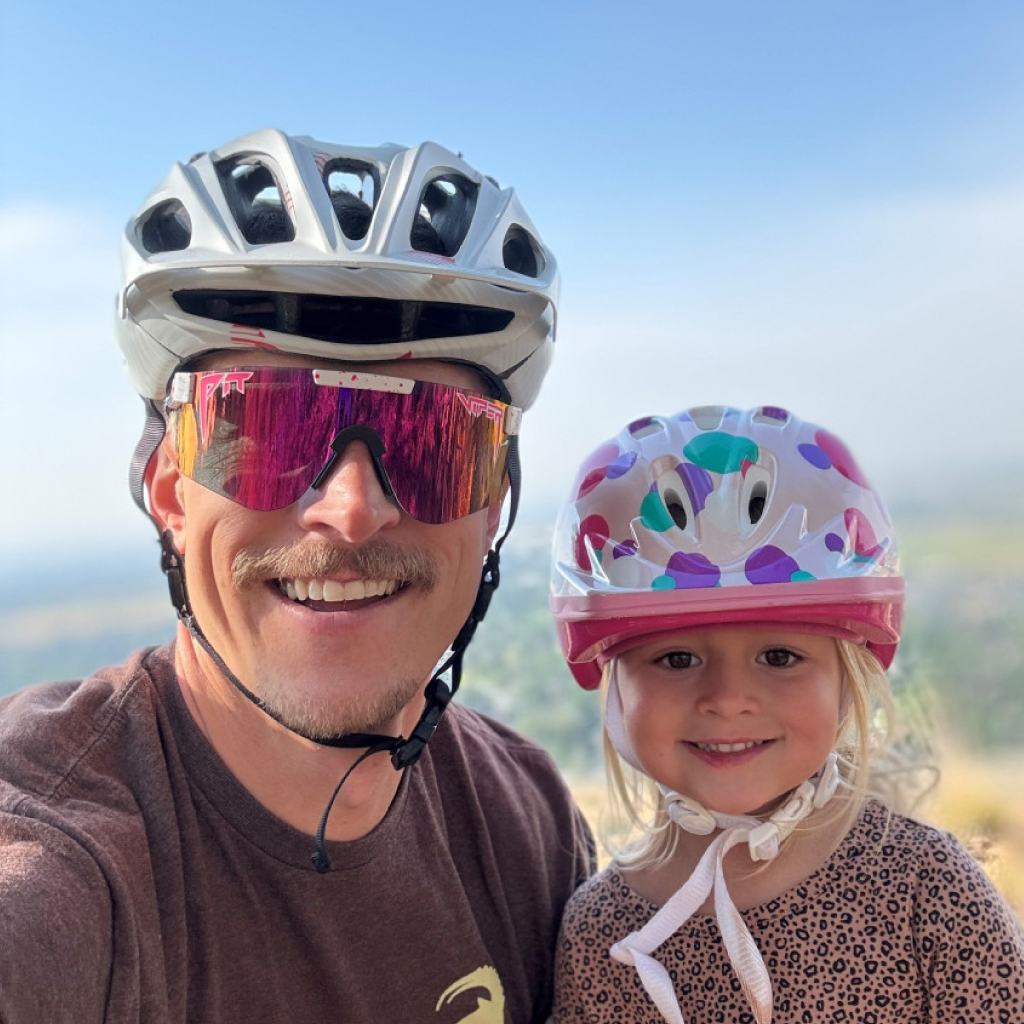
Chase Brownlee serves as the Senior Organizational Development Specialist for a large mining company with operations around the world.
  • Employer

    Sibanye-Stillwater

  • Position

    Sr. Organizational Development Specialist

  • Undergraduate Degree

    Bachelor in Geology/Earth Science

  • Graduate Degree

    Master of Science in Industrial and Organizational Psychology

When Chase Brownlee talks about finishing his Master of Science in Industrial/Organizational Psychology from Bellevue University, his first emotion isn’t relief.

“It’s sadness,” Brownlee said. “I miss it. I like to be busy. I like to be challenged. This wasn’t an easy program, and I really appreciated that.”

That response might seem unexpected from someone who just completed a rigorous graduate degree while working full time. But it captures something essential about Brownlee: he’s drawn to complexity, growth and meaningful work.

Today, Brownlee serves as a senior organizational development specialist for a large mining company with operations around the world. His role takes him across three operating sites in Montana, where his work focuses on leadership development, performance management, succession planning, training and large-scale change initiatives.

It’s high-stakes work in an industry where human behavior and decision-making can carry real consequences — and it’s work that increasingly reflects the education he gained at Bellevue University.

A career shaped by curiosity

Brownlee’s professional path didn’t begin in organizational development. He earned his undergraduate degree in geology and spent years working underground in mining operations. Over time, though, something shifted.

“Rocks are great,” he said. “But people are what keeps it interesting.”

When an opportunity emerged to move into training, development and people-focused work, Brownlee leaned in. He learned from mentors on the job and began looking for an academic program that would deepen his expertise and give him a stronger foundation for the work he was already doing.

He discovered Bellevue University’s online Master of Science in Industrial/Organizational Psychology program and was drawn to its credibility and cohort structure.

He didn’t want an isolated, self-paced experience. He wanted discussion, connection and accountability.

Balancing school with work wasn’t easy. Brownlee’s job often requires early mornings, long days and frequent travel between sites. But instead of feeling disconnected, his coursework and professional responsibilities reinforced each other.

A Bellevue University experience that translated directly to work

One of the biggest surprises for Brownlee wasn’t the workload — it was how much writing the Bellevue University program required.

“I wasn’t prepared for how much writing was involved,” he said. “But it showed me how to organize my thoughts and communicate them clearly.”

That skill shows up daily. Brownlee often serves as the bridge between complex ideas and practical application, helping frontline employees, supervisors and executives understand not just what needs to change, but why.

What stood out most was how directly the Bellevue University coursework connected to his real-world responsibilities.

“There was so much emphasis on theory to practice,” he said. “I’d learn something in class and then go back to work and apply it almost immediately.”

"There was so much emphasis on theory to practice. I’d learn something in class and then go back to work and apply it almost immediately."
Chase Brownlee
Bellevue University Alumni, Class of 2025

Research rooted in lived experience

Brownlee’s graduate research focused on the relationship between fatigue, risk perception and decision-making in the mining industry — a topic shaped by his own experience working demanding schedules in challenging environments.

“There were times I’d be driving at two in the morning and think, ‘How did I even get here?’” he said. “You’re still functioning, but you can tell something isn’t quite right.”

His research found that as fatigue increases, people tend to become more sensitive to financial risks while becoming less sensitive to health and wellbeing risks — a dynamic that can help explain why workers may be willing to take risks that adversely affect their health but limit risk to their financial situation.

Just as important, the research process gave Brownlee tools he continues to use today.

“I’m able to gather better data now,” he said. “I can analyze it better and help others make decisions based on evidence, not just opinions.”

Faculty who made the difference

Brownlee credits Bellevue University’s faculty with making the experience both rigorous and deeply relevant.

He points to Dr. Leslie Stager as someone who challenged his thinking and pushed him to slow down and examine assumptions more carefully. Dr. Leroy Simpson, he said, provided encouragement and perspective during a particularly difficult season at work.

Brownlee also credits JoDee Goracke, the program’s director, for bringing real-world understanding into the academic experience. Her industry background and ability to translate complex ideas into practical guidance helped him think more clearly about how to communicate with executive leaders.

“They get it,” Brownlee said. “They understand the real world.”


A career — and impact — still unfolding

Ask Brownlee where he hopes to be in five years, and you won’t get a rehearsed answer.

“I’ve always been an opportunist,” he said after a long pause. “That’s how I went from working with rocks underground to working with people.”

His focus isn’t on a specific title. It’s on continuing to grow, contribute meaningfully and stay open to what’s next.

From the classroom to the workplace, Brownlee’s story reflects what Bellevue University’s programs are designed to support: professionals balancing real lives and real careers — and seeking education that strengthens not just their résumé, but their confidence, capability and impact.

Explore this article and more on the

BU Newsroom